

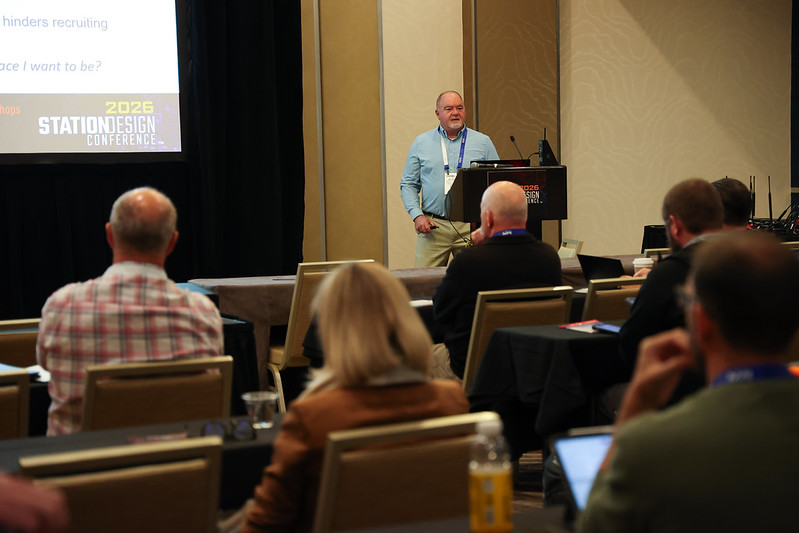
In May, I had the opportunity to attend and present at the 2026 Station Design Conference, where I joined fire service personnel, municipal leaders, architects, planners, and manufacturers from across North America to discuss one of the most important topics facing our profession today: designing fire stations that protect firefighter health and prepare departments for the future.
I was honored to present a session titled The Modern Volunteer Fire Station: Right-Sizing for Safety, Staffing, and Community Support. With about 50 attendees, the discussion focused on the unique challenges facing volunteer and combination departments—aging facilities, evolving staffing models, limited budgets, and the growing need to integrate modern health and safety practices into stations that often serve small, rural communities.
While I appreciated the opportunity to share our experiences, what stood out throughout the conference was how consistently these themes appeared across nearly every session. Whether the topic was planning today’s volunteer station to transition into tomorrow’s career department, designing next-generation public safety facilities, establishing a strong foundation for successful public safety projects, building community consensus, or supporting firefighter wellness through integrated design, the underlying message remained remarkably consistent.
Fire stations are no longer merely buildings that house apparatus. They are critical infrastructure that directly affects firefighter health, operational readiness, recruitment and retention, and the long-term resilience of the communities they serve.
One presentation emphasized planning facilities that can adapt as staffing models evolve. Another highlighted the importance of establishing a robust planning process before design begins, ensuring that operational needs—not assumptions—drive decision-making. Sessions on community engagement reinforced that successful projects require transparency, education, and trust-building long before a project reaches the ballot or funding stage.
Perhaps the most significant takeaway was the industry’s continued commitment to firefighter health and wellness. The integration of hot, warm, and cold zoning, contaminant control, improved ventilation, and thoughtful circulation planning is becoming an expected standard for fire stations, regardless of department size or the community served. The challenge is finding practical, affordable ways to implement these principles in facilities with limited space and constrained budgets.
As architects, we often focus on buildings. Conferences like this are an important reminder that our work is really about supporting people. A well-designed station is an investment in the firefighters who respond to emergencies, the volunteers who give their time to serve their neighbors, and the communities that depend on them. Thoughtful, well-planned design isn’t a luxury reserved for large metropolitan departments—it is an investment that benefits every community.
I’m grateful to everyone who attended my session, shared their experiences, and contributed to the conversations throughout the conference. The ideas exchanged over those few days will continue to shape how we approach the next generation of volunteer and combination fire stations—facilities designed not only for today’s needs but for the future of the fire service.
— Michael Petrovick, NCARB, AIA, Founder & Principal